Last week we met 1:1 with Jacob Mitchell, CEO of Antipodes Partners. We have followed Mitchell’s career since he was 3rd in charge at Platinum Asset Management and then as he established Antipodes Partners.
One of the topics of conversation was around the Artificial Intelligence (AI) boom, and whether we are in an AI bubble and how investors should position their portfolios.
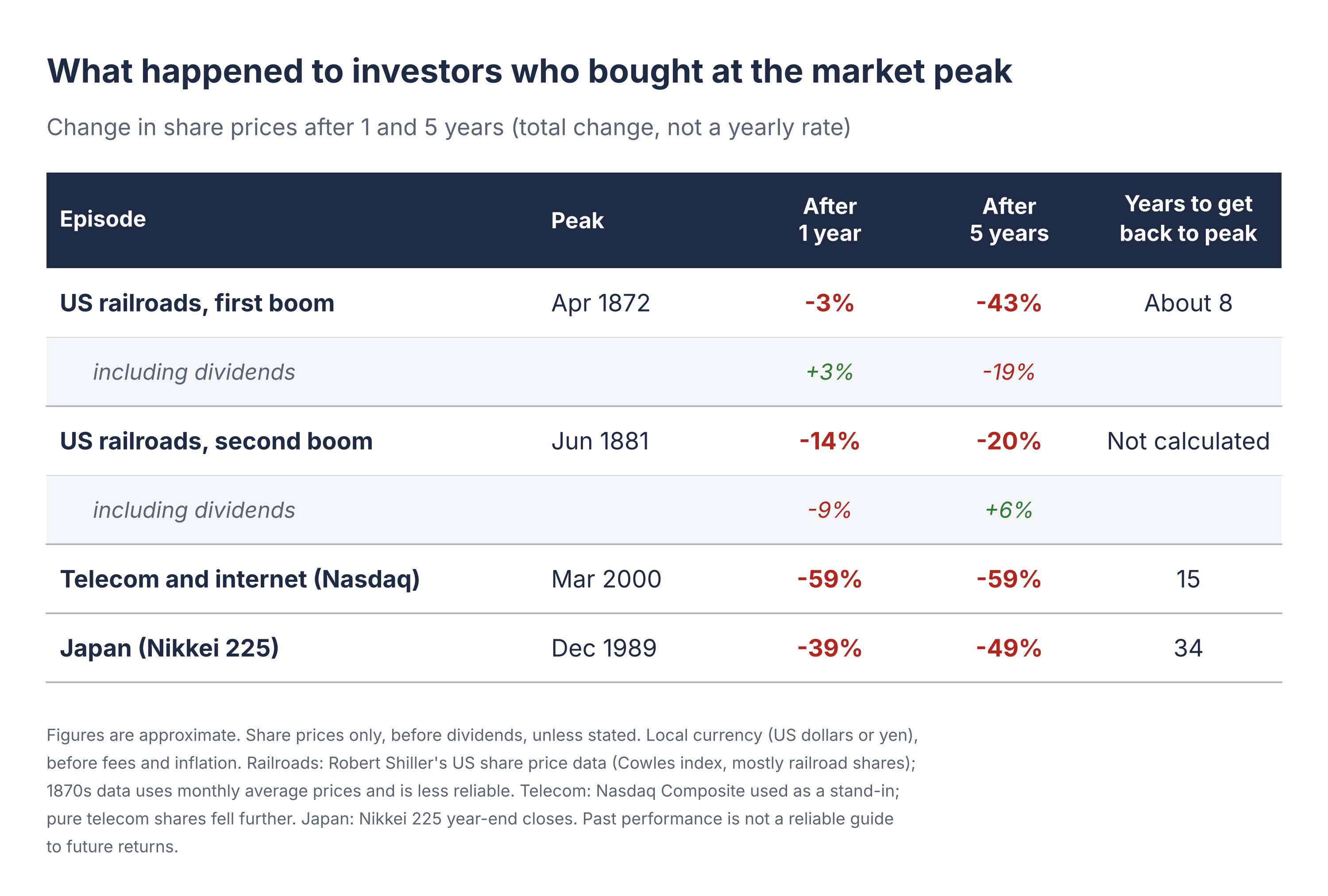
Mitchell highlighted the market concentration as a result of the AI construction/investment boom is now at levels seen in previous bubbles such as the dot.com bubble, Japan’s 1989 share market bubble and the US Railroads boom in the 1800’s.
For reflection, investors should consider what happened in the aftermath of previous bubbles to specific market segments (not the entire market) which is outlined in the table below
We are not disputing the significance of AI and the fact that it will change the world and the way we do things, just as the internet did over a quarter of a century ago.The question investors need to consider is whether the vast sums of money being spent now on AI will generate a reasonable return for investors to justify current valuations.
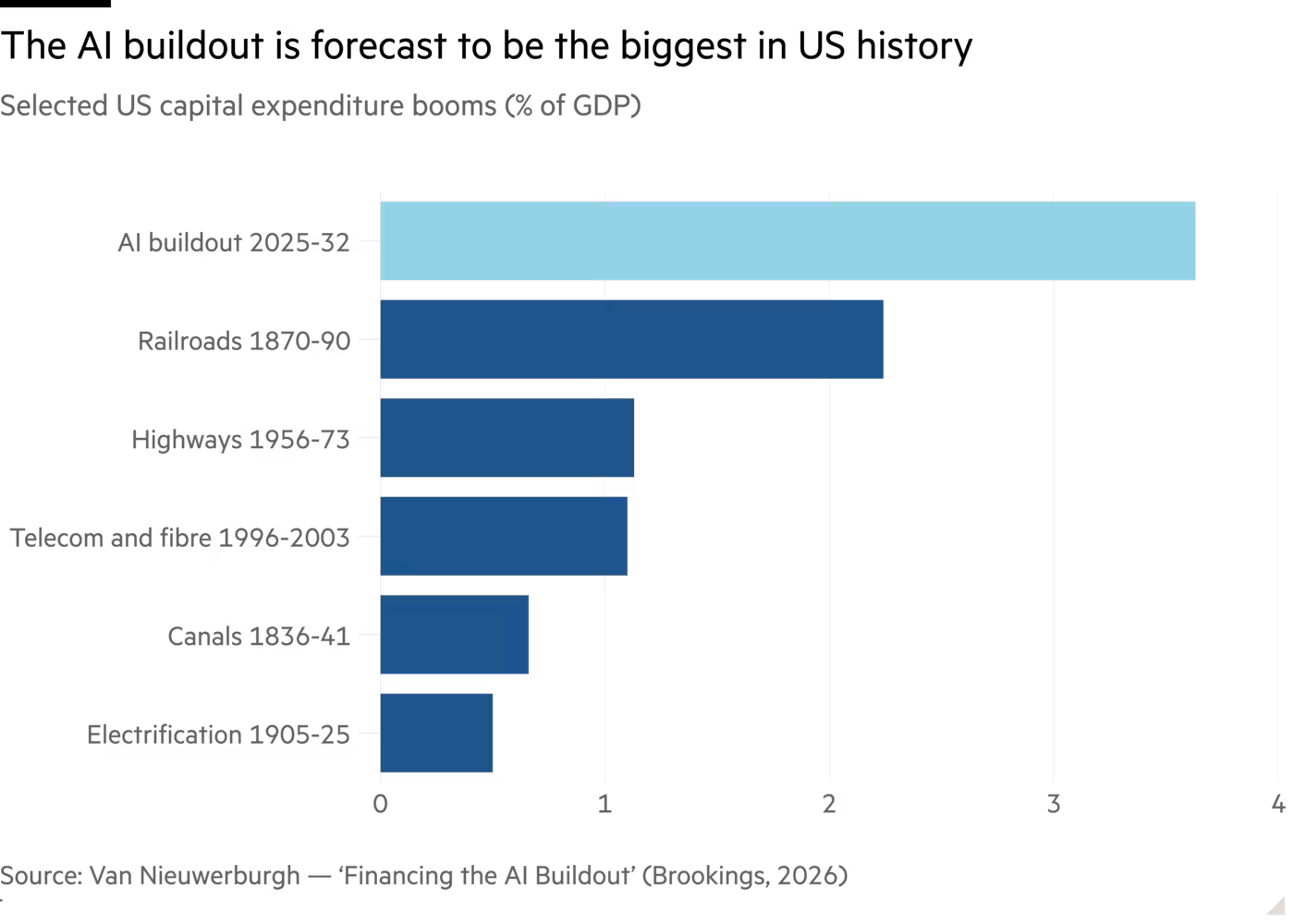
A paper written by S van Nieuwerburgh of the Columbia Business School “Financing the AI Buildout” shows that the surge in spending in the US to meet the demand for huge data centres to cope with AI demand will average 3.6% of GDP from 2025 – 2032. This would be larger than the average of 2.2% of GDP spent on railways between 1870 and 1890, far larger than the money spent on telecom and fibre to support the dotcom boom, making it the biggest sector specific investment boom in history.
What concerns Mitchell most about the AI buildout is the financing of it. Capital expenditure in 2026 is forecast to exceed cash flow for many of the large Technology companies with Oracle forecast to spend almost 150% above its cash flow on capital expenditure.
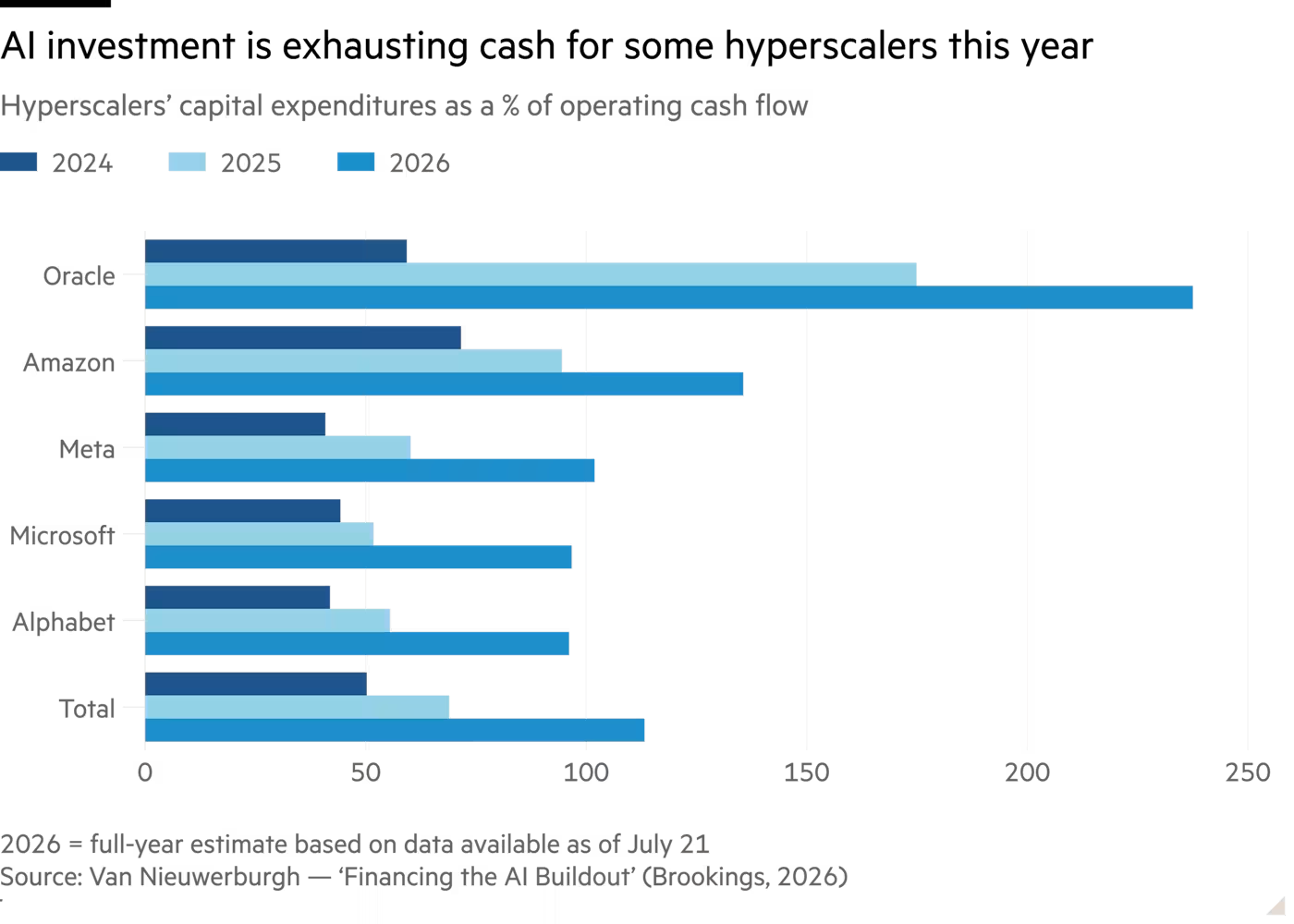
As a result, ever more complex financial arrangements are being made. Therefore, not for the first time, an investment boom is causing an explosion in leverage. According to Mitchell, publicly rated debt relating to AI represents only a relatively small share of data centre financing, where as much larger debts are provided through private credit facilities. Mitchell is monitoring Apollo Global Management as a proxy for lending practices to AI companies. Apollo hit a new record of US $114bn in new loans to AI companies in the September quarter, which was more than a 50% increase on the previous quarter bringing its 12 month lending volume to US $356bn to the sector.
Mitchell is also concerned that chip designers, cloud computing providers, data centre operators and infrastructure investors are increasingly dependant on each other through long term contracts, strategic investments and financing arrangements, which in turn creates a fragile environment. Mitchell flags 2028 as a big test for Private Credit lending to AI when many loans are due to be refinanced.
At GEM Capital we are very cautious toward the ‘AI trade’ and are selecting investment managers accordingly. We have a leaning more toward what we would describe as ‘everyday companies’ that are profitable with reasonable debt levels, rather than chasing the excitement of the AI trade.